

The Outsiders: Athlete Tracker for iOS — How the App Helps Balance Training and Recovery
Training progress is rarely about doing as much work as possible. For runners, cyclists, swimmers and other endurance athletes, the more difficult task is deciding when another demanding session will be productive and when recovery deserves priority. The Outsiders approaches that problem by bringing training load, sleep information and selected body metrics into one iOS app designed primarily for self-coached athletes. Developed by Gentler Stories, the team behind Gentler Streak, it focuses less on motivation and more on interpreting the data already generated by workouts and compatible devices. By 2026, The Outsiders had developed into a broader performance-analysis tool for iPhone and Apple Watch, with Garmin integration, FIT-file support, training goals, Home Screen widgets and detailed workout analysis. Its central idea, however, remains straightforward: training stress only becomes useful when the body has enough time and capacity to adapt to it.
How The Outsiders Turns Daily Data into a Training Decision
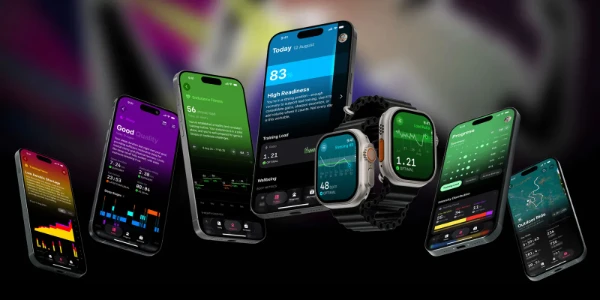
The main screen in The Outsiders is built around a question that endurance athletes face almost every morning: how ready am I to train today? Rather than presenting a collection of unrelated health statistics, the app brings recent workload and recovery information together through its Training Readiness feature. The result is intended to give context to the day ahead. A good readiness level can support the decision to complete intervals, a long ride or another demanding session, while weaker recovery signals can provide a reason to reduce intensity, shorten the planned workout or take a rest day. It is not a replacement for judgement, but it can make that judgement less dependent on enthusiasm, habit or a single metric.
This approach is particularly relevant to athletes who plan their own training. Without a coach reviewing several weeks of work, it is easy to focus on visible achievements such as weekly distance, hours trained or personal bests while paying less attention to accumulated fatigue. The Outsiders tries to put recent work into a longer context. The Today view can show Training Readiness alongside Training Load Ratio, sleep information and body metrics, so a hard workout is not assessed only by how it felt at the time. An athlete can instead see whether that session arrived during a period of manageable workload or added further stress to an already demanding block.
The app became more flexible during 2026. Garmin Connect integration allows compatible Garmin workouts to enter The Outsiders automatically, while FIT-file support makes it possible to bring in sessions recorded with other equipment when the required data reaches Apple Health. The developer specifically references devices and services such as Zwift, Wahoo, COROS, Karoo and Amazfit in connection with FIT imports. That matters because an athlete may use an iPhone every day without recording every run or ride on an Apple Watch. The Outsiders can therefore act as an analysis layer for a broader training history rather than requiring every session to originate from one wearable.
Training Readiness Without Drowning in Numbers
Training Readiness is designed to reduce several signals to a more understandable daily view. According to The Outsiders documentation, the calculation considers recent and longer-term training load, sleep quality and overnight body information. Relevant measurements include sleeping heart rate, heart rate variability, wrist temperature and respiratory rate when suitable data is available. Instead of expecting the athlete to interpret every change separately each morning, the app produces a readiness percentage and a descriptive level. Higher readiness supports more demanding work, while a lower reading indicates that lighter training or rest may be more appropriate.
The usefulness of the score lies in its context rather than the percentage alone. A lower result after a deliberately hard weekend is different from the same result appearing during what should have been an easy week. Poor sleep can reduce readiness even when training load itself looks reasonable, while an unusual change in overnight measurements can add another reason to be cautious. In practical terms, a cyclist who planned threshold intervals after several demanding rides may choose an easier endurance session when readiness has fallen. A runner who has recovered well after a lighter week may have stronger evidence that the planned quality session fits the current state of training.
Readiness scores should still be treated as guidance rather than instructions. Wearable measurements can be incomplete, devices may occasionally miss a night of data, and an algorithm cannot know everything that affects an athlete’s condition. Soreness, illness symptoms, unusual pain, travel, emotional stress and simple personal judgement still matter. The Outsiders becomes more useful when it has an established history to compare against; the developer has previously recommended substantial training and health history, including regular overnight readings, for the strongest results. A single morning score should therefore not overrule obvious physical warning signs or professional medical advice.
Balancing Training Load with Real Recovery
One of the most useful distinctions in The Outsiders is the difference between recent training stress and the workload an athlete has gradually become accustomed to. The app expresses this relationship through Training Load Ratio, or TLR. In simple terms, it compares a short period of recent training with a longer training baseline. The current documentation uses a seven-day acute load and a 42-day chronic load, with recent sessions carrying more weight. The point is not to reward the highest possible number. It is to show when current training has moved substantially above or below the amount of work the athlete has been prepared for over previous weeks.
The Outsiders identifies roughly 0.8 to 1.3 as a productive TLR range in its guidance, although the number needs context. A lower ratio can be perfectly sensible during a planned recovery week, holiday, taper or return from illness. A temporary rise can also be deliberate during a focused training block. The concern is repetition without enough recovery. When recent training keeps increasing faster than the longer-term base, fatigue can accumulate more quickly than adaptation. Looking at the trend over several days is consequently more useful than reacting to one isolated reading. It encourages gradual progression rather than treating every week as an opportunity to set a new volume record.
This is also where the relationship between training and recovery becomes clearer. Workload explains what the athlete has asked the body to do; sleep and body measurements provide additional clues about how that demand is being handled. The app can present sleep duration and quality alongside heart rate variability, sleeping heart rate, wrist temperature and respiratory information. These measurements do not all need to move in the same direction, and normal values vary substantially from one person to another. The more useful comparison is usually with an athlete’s own established range. A value that is ordinary for one runner could be unusual for another.
What Recovery Data Can — and Cannot — Tell You
Heart rate variability is a good example of why personal trends matter. HRV describes variation in the time between heartbeats, and athletes often use changes in it as one indicator of recovery and physiological stress. The Outsiders can track the measurement over time rather than presenting one night in isolation. Sleeping heart rate provides another reference point. If an athlete normally records fairly stable overnight values and suddenly sees a noticeable change after several demanding days, the information may support a more cautious training choice. Neither metric, however, provides a diagnosis or proves that a specific problem is present.
Sleep data adds another part of the picture because a training plan can look sensible on paper while recovery outside training deteriorates. Short or disrupted nights can influence how demanding the same workout feels, particularly across several consecutive days. The Outsiders can show sleep quality and longer-term sleep trends, helping an athlete compare them with readiness and workload. This can be useful after travel, a busy working week or an unusually heavy training block. Instead of automatically completing the session written into a plan several weeks earlier, the athlete has more current information on which to base a reasonable adjustment.
There are also limits to what wearable data can represent. A watch does not directly measure motivation, muscle damage, nutrition quality or every form of life stress. Wrist temperature and respiratory measurements can change for many reasons, while individual HRV readings naturally fluctuate. The sensible use of The Outsiders is therefore not to chase ideal numbers but to look for patterns and combine them with how the body actually feels. Persistent pain, symptoms of illness or concerns about recovery require a different response from simply moving an easy run to another day. An athlete tracker can organise useful evidence, but it is not a medical assessment tool.
Using The Outsiders for Long-Term Progress on iOS
Daily readiness becomes more valuable when it is connected with longer-term progress. The Outsiders includes an Endurance Fitness measure based on chronic training load, representing the amount of endurance work the athlete has gradually adapted to handling. It uses a 42-day weighted training history, so the value changes more slowly than a daily readiness score. That makes it useful for recognising broader direction. A steadily developing training base should generally look different from a sudden one-week increase in activity, while a prolonged reduction in training after illness, injury or a break can appear as a gradual decline rather than an immediate collapse.
The Progress area also gives athletes ways to review training over longer periods rather than judging improvement by pace or distance alone. Depending on the available data and sport, The Outsiders can show measures such as Endurance Fitness, Cardio Fitness and cycling FTP alongside training distribution and workout history. Training Goals add another practical layer. During 2026, goal options were expanded to include the number of sessions and time spent in Training Focus, heart-rate and cycling power zones, in addition to broader workload targets. This is useful for athletes whose priorities are more specific than simply accumulating kilometres. A cyclist, for example, may care about time spent within a particular power range, while a runner may be working on consistency across several sessions each week.
The 2026 updates also made frequently checked information easier to reach. Home Screen widgets can display Training Readiness, Training Load Ratio, Endurance Fitness and selected body metrics without requiring the user to move through several screens. Apple Watch support provides readiness and recent metric information on the wrist, while watch-face complications can keep Training Readiness and TLR visible during the day. Version 1.8, released in September 2026, added Siri App Intents, allowing users to request information such as readiness, workouts, sleep or body data by voice. The same update introduced on-device workout-title suggestions and broader adaptive layouts, while keeping the core emphasis on interpreting training rather than simply collecting more statistics.
Who Will Get the Most Value from the App in 2026
The Outsiders is most naturally suited to self-coached runners, cyclists, swimmers and other endurance-focused athletes who already train regularly and want a clearer relationship between workload and recovery. Someone who exercises occasionally may not need chronic-load trends, readiness calculations or detailed training zones. For an athlete preparing for a cycling event, running race or demanding personal target, however, those measurements can provide useful context across a long block of training. The app does not build an entire coaching programme or make every training decision automatically. Its stronger role is showing what recent training has done to the bigger picture before the athlete decides what to do next.
Device compatibility is another practical consideration. The Outsiders requires iOS 26 or later on iPhone, while its Apple Watch app requires watchOS 26 or later. The application is free to install with paid features available through its freemium model. In September 2026, Gentler Stories listed US pricing at $6.99 per month, $49.99 per year with a free trial, or $119.99 for a one-time purchase; actual App Store pricing can vary by country and local currency. Garmin integration and FIT imports broaden the range of workout sources, but Apple Health remains important to the way health and recovery information reaches the app.
Privacy is also relevant when an app handles detailed health and training information. Apple’s App Store privacy disclosure states that the developer does not collect data from The Outsiders, while Gentler Stories describes the app as operating without user accounts or its own servers for personal training data. This approach fits the application’s wider design: provide enough information to support a decision without turning every workout into another target to beat. The strongest use case is not checking whether a score is perfect each morning. It is recognising when training is progressing at a sustainable rate, when recovery is beginning to fall behind and when doing slightly less today may make the next important session more productive.